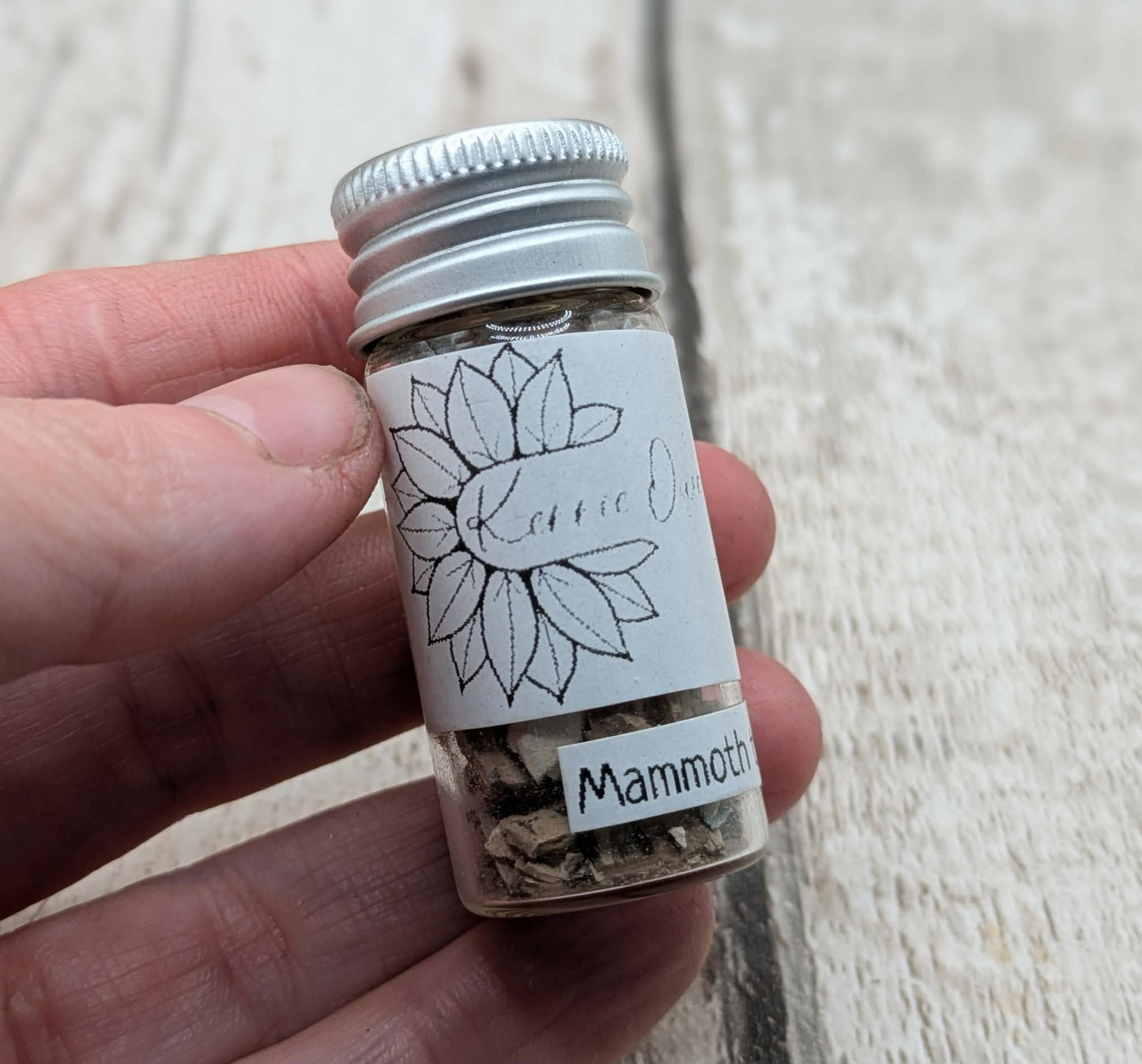
Fossilised Mammoth Ivory – 15ml Specimen Vial (Inlay & Craft Material)
A 15ml vial of fossilised mammoth ivory fragments, separated from a larger working specimen and made available as secondary material for jewellery makers, inlay artists, collectors, and natural material practitioners.
Material & Identity
Mammoth ivory is a fossilised biological material originating from extinct Ice Age mammoths (Mammuthus species). Unlike modern ivory, this material has undergone long-term burial and mineral stabilisation processes over thousands of years. The structure is composed primarily of dentine, which preserves characteristic growth patterns and microstructural layering.
Formation & Science
Ivory is formed through dense dentine tissue arranged in a cross-hatched microstructure that provides strength and flexibility during the animal’s lifetime. In fossilised specimens, this structure is preserved as mineral replacement gradually stabilises organic components over geological time. This process maintains visible grain, patterning, and structural flow unique to proboscidean tusk material.
Material Use & Application
This vial contains irregular fossil fragments suitable for:
- jewellery inlay and fine detail work
- resin casting and mixed media projects
- specimen collections
- geological or palaeontological study
- craft material sourcing
Each fragment varies in tone, density, and internal patterning depending on original tusk structure and fossilisation conditions.
Context & Interpretation
As a prehistoric fossil material, mammoth ivory is often valued for its connection to extinct Ice Age megafauna and deep environmental history. Within contemporary creative and symbolic practices, it may be used according to individual interpretation systems, while its primary classification remains geological and fossil-based in nature.
Presentation
Supplied in a sealed 15ml glass vial for storage and handling. Each batch is unique due to natural fragmentation and variation within the original specimen.